ServicesMain Water Line Replacement
Main Water Line Replacement in Lewisburg, TN
When the buried pipe between the meter and your home begins to fail, fixing one spot tends to buy only a little time. We lay a complete new line in pipe rated for burial, add a fresh shutoff at the house and restore your yard as carefully as the ground allows.
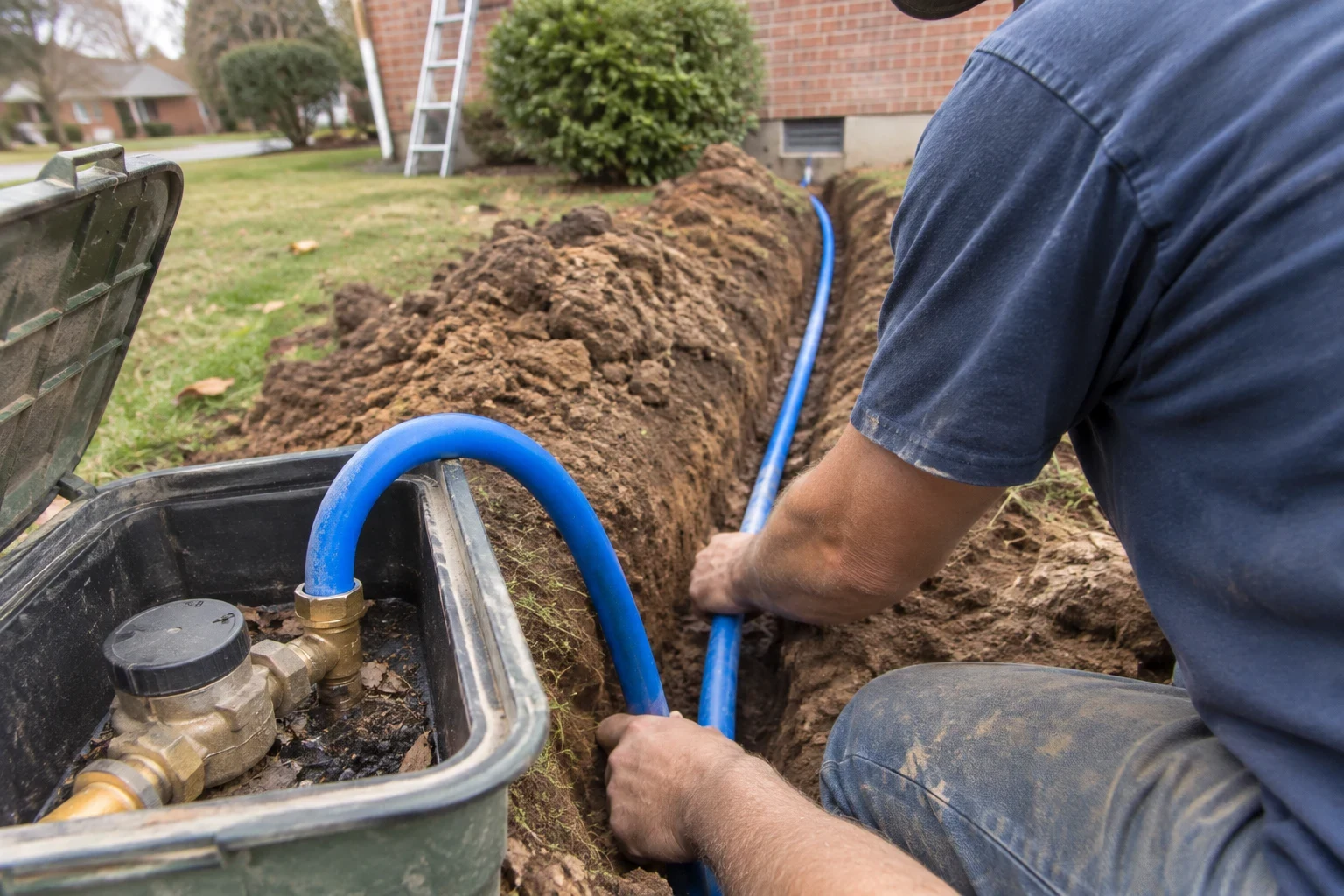
A new supply line, from the meter to your home
Your main water line is the buried pipe between the water meter near the street and the shutoff where water enters your home. The utility looks after the meter side. The stretch across your property is yours. Many lines around Lewisburg are galvanized steel, early polybutylene or thin copper laid decades ago, and they tend to wear out slowly rather than all at once.
Replacement makes sense when the pipe itself is the problem: breaks that keep coming back, rust in the water, pressure that has faded over the years, or a material known to fail. We install one continuous run of new pipe, usually polyethylene or PEX rated for burial, or type K copper if you prefer it, and finish with a fresh shutoff valve at the house.
The work is done by a Master Plumber under our Tennessee CMC-A plumbing license. We are licensed and insured, which matters on a job that involves digging on your property and connecting to the public supply.
What the replacement includes
- Utility locates before digging
- We arrange the locate so gas, electric and cable lines are marked before any trench opens. That sets the earliest dig date, and we plan the schedule around it.
- Trench or bore, chosen for your yard
- Most lines go in through a narrow trench. Where the route crosses a driveway, a walk or an established bed, we can often bore underneath and leave the surface alone.
- One continuous run of new pipe
- We lay the pipe in a single length wherever possible, with no buried joints to fail later. It is bedded below frost depth so winter cold snaps do not reach it.
- New shutoff and a pressure check
- We fit a new main shutoff inside and measure the incoming pressure. If it runs high, we will recommend a pressure reducing valve so your fixtures and water heater are not working against it.
- Permit and inspection
- We pull the plumbing permit where one is required and schedule the inspection before backfill, so the trench stays open only as long as it needs to.
- Backfill and cleanup
- Soil goes back in layers and is tamped and raked level. Grass takes a season to knit back, and we will tell you that honestly rather than promise the yard will look untouched.
Signs your main line is near the end
Pressure that keeps dropping
Showers weaken and the washer takes longer to fill, at every fixture in the house. Corroded pipe narrows from the inside, and a slow loss of pressure is often the first clue.
Rusty or cloudy water at every tap
Discolored water throughout the house points to the supply line or the water heater. We check which one before recommending anything.
A soggy patch that never dries
Wet ground or unusually green grass between the street and your home, especially during a dry stretch, usually means water is escaping from the line below.
A water bill with no explanation
If usage climbs while your habits stay the same, water may be leaving the line before it ever reaches the house.
The same line, repaired again
One break can be bad luck. A second or third on aging pipe usually means the rest of the run is close behind.
Gray plastic or old steel pipe
Gray polybutylene and galvanized steel are both known to fail with age. If either is where your line enters the house, it is worth having us look.
What shapes the price
Every line is different, so we price yours only after we have walked it. The estimate is free and broken out line by line, so you can see where each dollar goes before any digging starts. You can pay with any major credit card or in cash, and financing options are available.
How long and how deep the run is
The farther your home sits from the meter, the more pipe we lay and the longer the trench has to run. Burying the line deeper also adds labor.
What sits along the route
Driveways, mature trees and landscaping can push the job toward boring instead of trenching. Boring is priced differently but spares you the cost of rebuilding the surface.
Soil and rock
Rock ledge is common in the area. Running into it can mean slower digging or a changed route, and we flag that possibility in the estimate.
Pipe material and extras
Polyethylene, PEX and copper each carry a different price. A pressure reducing valve or changes at the meter connection add to the total, and each appears as its own line.
How the job runs
- 1
A free estimate on site
We walk the route from the meter to the house, test the pressure and identify the pipe material at the entry. You get a written estimate that explains trench versus bore for your yard, and we can talk through financing if that helps.
- 2
Permit, locates and a set date
Once you approve the estimate, we file the permit and request the locates. We give you a start date and tell you when the water will be off.
- 3
Digging and laying the pipe
Middle Tennessee clay and limestone can slow a trench, so we bring equipment sized for it. Water stays on for most of this stage.
- 4
Connection, testing and inspection
We shut the water off, connect at both ends and pressure-test the new line. The inspector signs off before any soil goes back.
- 5
Backfill and a walk-through
We backfill, clean up and walk the finished work with you. We show you the new shutoff and how to use it.
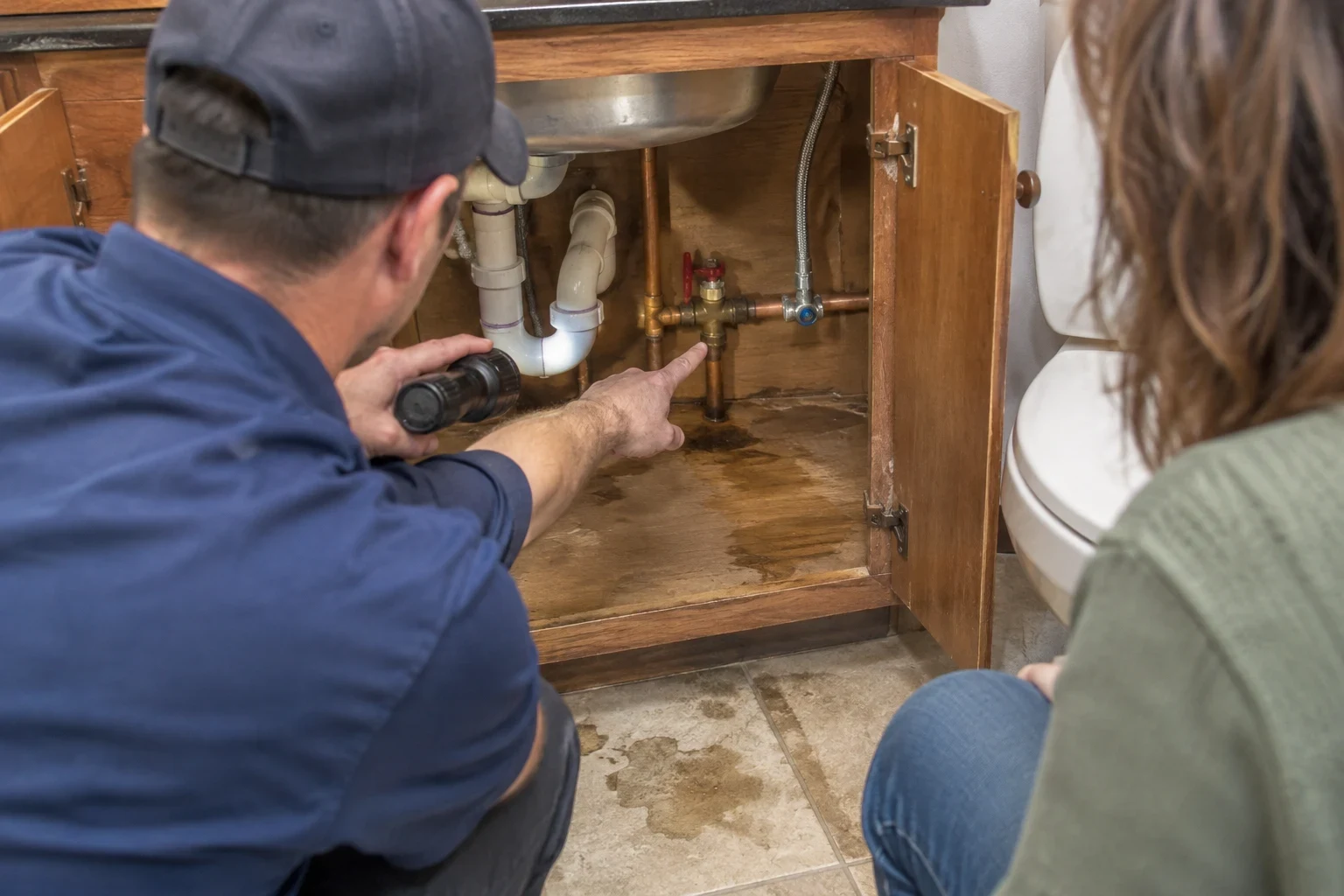
Questions about main line replacement
How long will we be without water?
Usually only for part of the connection day, not the whole project. The new line goes in while your old one is still working. We give you the shutoff window ahead of time so you can fill a few pitchers and plan around it.
Do you have to dig up my whole yard?
No. A trench for a water line is narrow, and where it would cross a driveway or established planting we can often bore underneath instead. We show you the planned route at the estimate so nothing comes as a surprise.
Is the line my responsibility or the city's?
Typically the meter, along with the pipe running to it from the street, belongs to the utility. The length from the meter across your property to the house is yours to maintain. If the meter or curb shutoff needs attention, we will tell you and coordinate with the utility.
What if the line breaks in the middle of the night?
Close the main valve where water comes into your home first, then phone us. Our emergency plumbing service runs 24/7, so the water can be stopped that night and the replacement planned once everything is safe.
Will my homeowners insurance pay for this?
Policies vary. Many cover sudden water damage but not a line that wore out with age. We photograph what we find and write it up so you can share it with your insurer, but the coverage decision is theirs.
Can I pay over time?
Yes. Financing options are available, and any major credit card or cash works too. We can go over the choices with you during your free estimate.
Have your main line looked at
We will walk the line, test the pressure and tell you plainly whether it needs replacing. The estimate is free, and if water is already pooling in the yard, our emergency service runs 24/7.