ServicesTankless Water Heaters
Tankless Water Heater Installation in Lewisburg, TN
We size, install and set up tankless water heaters so hot water keeps pace with the way your home actually uses it. Gas or electric, we plan the supply, venting and valves before anything goes on the wall, and the estimate is free.
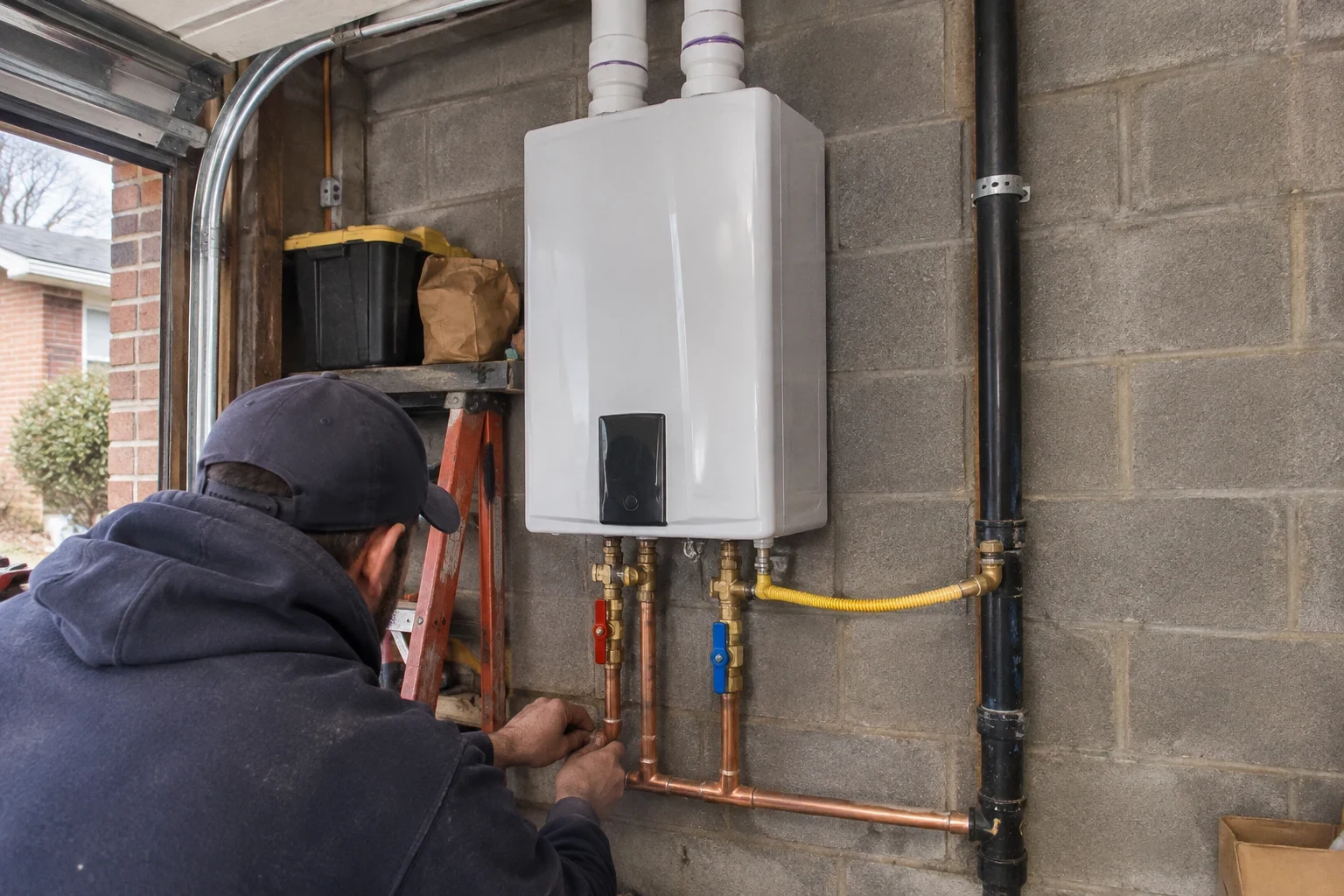
When going tankless makes sense
A tankless water heater heats water only as it flows. There is no 50-gallon tank sitting hot all day, and no running out halfway through the second shower. The tradeoff is that the unit has to be sized for your peak demand, not your average, and your home has to be able to feed it with enough gas, proper venting or enough electrical capacity.
Groundwater in Middle Tennessee runs noticeably colder in January than in July, so the heater has to raise the temperature further in winter. We size for that coldest stretch, which means the flow you get in February matches the flow you were promised.
Every tankless installation we do is carried out by a Master Plumber, working under our Tennessee CMC-A plumbing credential. We are licensed and insured, so the gas, water and venting work in your home meets code and someone stands behind it. If a conventional tank would serve your household better, we will say so plainly.
What the installation includes
Sizing from your real fixtures
We count the showers, faucets and appliances you run at the same time and size the unit by gallons per minute at your winter temperature rise. An undersized unit shows itself as lukewarm water on the first cold morning.
Gas supply and venting
Tankless gas units draw far more gas at full fire than a tank heater does. We check the meter and line size, then run venting to the manufacturer's specification, often PVC for condensing models, with a condensate drain where one is needed.
Electrical capacity check
Whole-house electric units can call for large dedicated circuits. We look at your panel before recommending one and tell you if an electrician will be needed, so that cost is known before you decide.
Service valves for descaling
Our area's water carries a lot of minerals, and scale is what shortens a tankless unit's life. We install isolation valves so the heat exchanger can be flushed in under an hour instead of being taken apart.
Removal of the old heater
We drain, disconnect and haul away your old tank, cap any lines that are no longer needed and leave the space swept and clean.
Startup and walkthrough
We set the temperature, test each fixture and show you the shutoffs, the common error codes and the flush routine.
When a tankless heater starts to make sense
Showers turning cold midway
When whoever showers last keeps ending up with lukewarm water, the tank no longer matches how your household uses it. A correctly sized tankless unit delivers hot water for as long as the tap stays open.
An aging tank showing wear
Rust-tinted hot water, rumbling from settled sediment or moisture around the base all point to a tank near the end. Choosing a replacement now is calmer than choosing one in a hurry.
You need the floor space back
Hung on a wall, the heater takes up little more room than a small medicine cabinet. That can free a closet, a garage corner or a cramped utility area.
Paying to keep water hot all day
A tank reheats around the clock, even while everyone is at work. Tankless heats only on demand.
An addition or new bathroom
More fixtures can push an existing tank past what it can deliver. Planning the heater alongside the remodel avoids patching it in later.
How installation day runs
- 1
Free estimate at your home
We look at your gas or electrical supply, the venting route and where the unit can live. You get a written estimate with each item listed, including anything your home needs to support the new heater.
- 2
Permit and scheduling
We pull the permit where your jurisdiction requires one and set a date that suits your week. Most homes are without hot water only for part of a single day.
- 3
Protecting the space
We lay floor protection along our path, shut off water and gas, and drain and remove the old heater.
- 4
Mounting and connecting
The unit goes on the wall, then the gas or electrical connection, venting, service valves and condensate line. Every gas fitting is tested for leaks before the unit fires.
- 5
Testing and handover
We run hot water at several fixtures at once to confirm flow and temperature, clean up, and walk you through care and the controls.
What shapes the cost of a tankless install
We price each tankless job from what we see at your home, and the number is written down before any work starts. The heater itself is one piece; most of the variation comes from what the house needs to feed and vent it. We take cash and all major credit cards, and financing options are available if paying over time fits your budget better.
- Fuel type and unit capacity
- Condensing and higher-output units carry a larger up-front cost. Right-sizing means you neither pay for flow you will never draw nor end up short on a cold morning.
- Gas line and meter
- A lot of existing gas lines were sized with a tank heater in mind. A longer or wider run, or a meter upgrade from the gas utility, adds to the job.
- Venting route and placement
- A short, direct path to an outside wall keeps things simple. Relocating the heater or venting through finished rooms takes more time and material.
- Electrical work
- Electric models may call for new circuits or added panel capacity, handled by an electrician. We point this out during the estimate.
- Scale protection
- Where the water is mineral-heavy, a scale filter ahead of the heater guards the heat exchanger. Some homeowners pair it with our whole home water filtration.
Tankless water heater questions
Something not covered here? (931) 367-2944
How long does installation take?
A replacement where gas and venting are already close usually takes most of a day. Converting from an electric tank to gas, or moving the heater to a new spot, can run into a second day. We give you the expected timeline with your estimate.
Will a tankless heater keep up in winter?
Yes, when it is sized for winter. Incoming water is coldest in those months, so the heater works harder to reach the same temperature. That is why our recommendation may be larger than the unit a store suggests.
What maintenance does it need?
Plan on flushing the heat exchanger about once a year, more often with hard water, and cleaning the inlet screen now and then. The service valves we install make it a short job. We can show you how or take care of it for you.
Can I keep my existing gas line?
Sometimes. Tankless units often need a larger line than a tank heater. We measure the run and check the meter before quoting, so nothing changes on installation day.
Will I wait longer for hot water at the faucet?
Water still has to travel from the heater to the tap, so the wait is close to what you have now, occasionally a few seconds longer. On long runs a recirculation option can shorten it, and we will tell you honestly whether it is worth it for your layout.
My old tank quit and the install date is still ahead. What now?
Phone us any hour. Our plumbers answer emergency calls 24/7, and we can shut off the water, make the area safe and go over your replacement choices with you so you are not left waiting.
Plan your tankless upgrade
Tell us how your household uses hot water, and we will come look at the gas, venting and space before recommending a unit. The estimate is free and comes in writing.