ServicesWater Filtration
Whole Home Water Filtration in Lewisburg, TN
We test your water first, then install a filtration system at the main line that treats what is actually in it. You get cleaner water at every tap, gentler water on fixtures and appliances, and a system that is simple to look after.
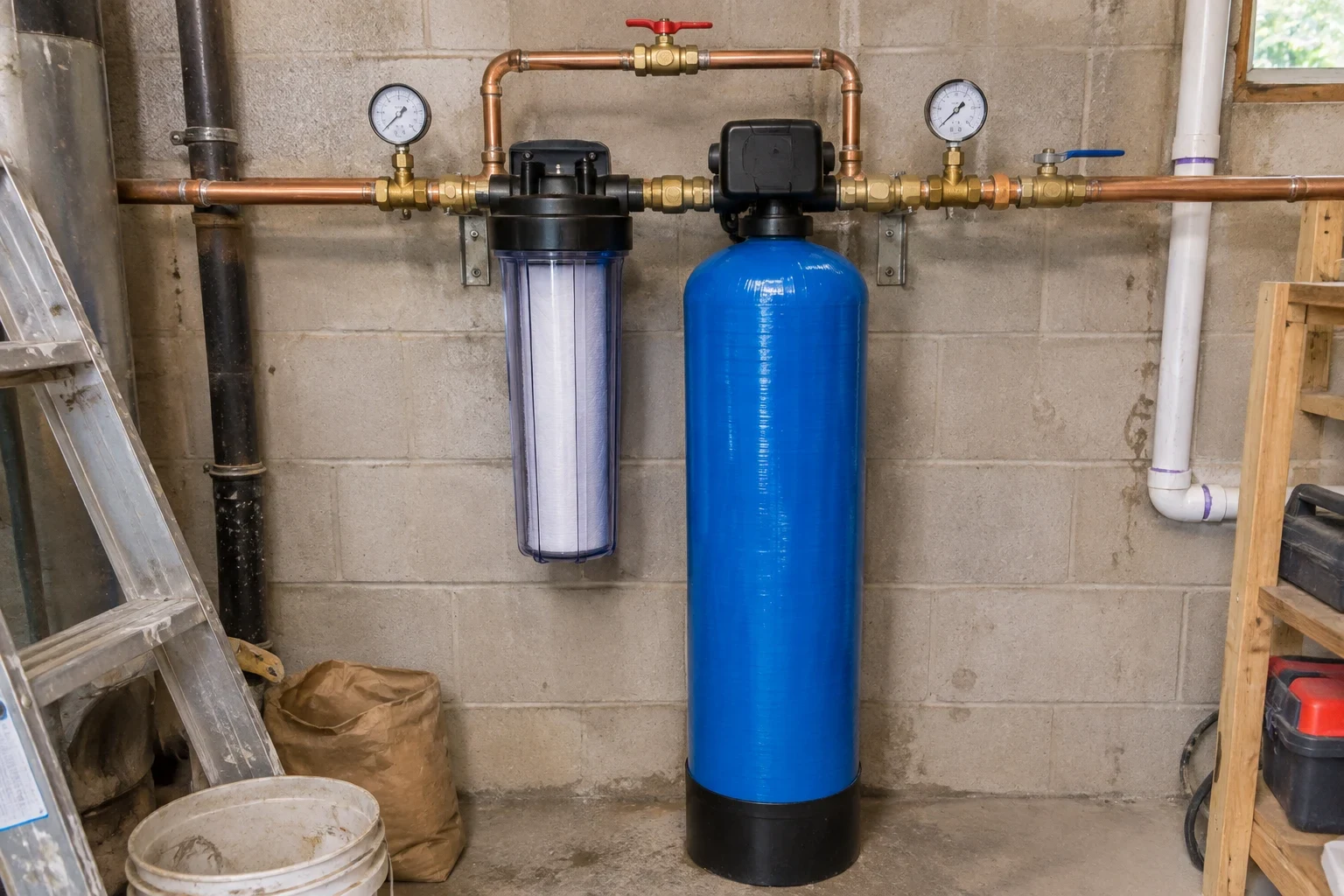
Filtration Matched to What Comes Out of Your Tap
A whole home system sits where water enters the house, so the kitchen, the showers, the washing machine and the water heater all draw from the same treated supply. That is different from a pitcher or an under-sink filter, which only cleans one glass at a time.
Middle Tennessee sits on limestone, and the water here tends to carry calcium and magnesium that leave white crust on faucets and scale inside heaters. City water also carries a disinfectant that some people taste and smell. Homes on a private well can have sediment, iron or other issues entirely. We start with a test so the equipment fits the water, not a sales sheet.
Every installation is done under our Tennessee CMC-A plumbing license, with the work done by a Master Plumber.
What the Installation Includes
- A water test before anything is chosen
- We check hardness, chlorine, iron and sediment at your tap. The readings are yours to keep, and we go over them with you in plain terms before recommending any equipment.
- Sediment prefilter
- A first stage catches sand, rust flakes and grit. It protects the main media and is the part you will change most often.
- Carbon filtration or softening, as needed
- Carbon reduces chlorine taste and odor. If hardness is the main problem, we pair filtration with a softener or recommend the right combination after the test.
- Bypass valve and shutoffs
- We plumb in a bypass so the system can be serviced or skipped without shutting off water to the whole house. Isolation valves on each side make filter changes clean and quick.
- Neat, protected installation
- Pipe runs are level, supported and labeled. Equipment in a crawlspace, garage or outside wall gets protection from freezing, since a January cold snap can crack a housing left exposed.
Signs Your Home Would Benefit From Filtration
White crust on faucets and showerheads
Scale builds on fixtures first. If you are soaking showerheads in vinegar every few months, the same minerals are coating the inside of your water heater.
A chlorine smell in the shower
Treated city water is safe, but many people dislike the smell and the way it leaves skin and hair feeling dry.
Spotted glasses and stiff laundry
Hard water leaves film on dishes and keeps soap from rinsing out of towels.
Orange or brown stains from a well
Iron and sediment show up in toilet bowls, tubs and laundry. A filter sized for well water can stop the staining at the source.
A new water heater you want to protect
If you just installed a tank or are planning tankless water heater installation, filtering and softening first helps the heat exchanger stay free of scale.
What Shapes the Price
No two systems cost the same, because no two water supplies are the same. Your written estimate breaks out each part and the labor on its own line, so nothing sits inside a lump sum. If spreading the cost out helps, we offer financing, and we take cash as well as all major credit cards.
Your test results
Water that only needs chlorine reduction calls for less equipment than water that is also hard or carries iron. The more the test turns up, the more stages the system needs.
Type of system
A cartridge filter, a backwashing carbon tank and a softener combination differ in both equipment and upkeep.
Size of your home
More bathrooms and higher flow mean a larger system, so pressure stays strong when the shower and dishwasher run together.
Where it goes
An open garage wall is straightforward. A tight crawlspace or an outdoor spot that needs freeze protection takes more time and material.
How the Work Goes
- 1
A call and a free estimate
Tell us what you are noticing at the tap and if your water comes from the city or a private well. We set a time to come out at no cost.
- 2
Testing and a walk-through
We test the water and find where your main line enters, be it a crawlspace, a utility room or the garage. Then we give you a written estimate with each part listed.
- 3
Installation day
We shut off the water, protect the floor around the work area and cut the system into the main line. Most homes are without water for only part of the day, and we tell you the timing before we start.
- 4
Startup and a short lesson
Fresh media gets rinsed until the water runs clear, and every fitting is pressure tested before we call it done. Before leaving, we clean the work area and show you how the bypass works and how to swap a cartridge.
Questions About Whole Home Filtration
Will a filter lower my water pressure?
Not in any way you should notice, as long as the system is sized correctly. We match it to the fixtures in your home and add pressure gauges on both sides, so a falling reading tells you a cartridge is ready to change.
Is a filter the same as a water softener?
No. A filter removes things like chlorine and sediment, while a softener removes the hardness minerals that cause scale. Many homes here benefit from both, and the test tells us whether yours does.
Do you install systems for well water?
Yes. Well water often needs different stages than city water, especially for sediment and iron. We test it first and plan the system around those results.
How much upkeep is involved?
Sediment cartridges usually need changing every few months, depending on your water. Carbon tanks and softeners need less frequent attention. We leave you with a clear schedule and show you how to do it.
Do I need a permit?
It depends on where you live and what the work involves. If a permit is required, we pull it and handle the inspection. We are licensed and insured, and that is part of doing the job properly.
Find Out What Is in Your Water
A test and a written estimate cost you nothing, and you decide from there. We serve Lewisburg and nearby towns such as Shelbyville and Columbia.